Side hustle ideas and startup opportunities summarized. Sam Parr and Shaan Puri's best business breakdowns in 3-minute reads. Updated daily.

AI-powered summaries • Last video: Jan 12, 2026

This page tracks all new videos from My First Million and provides AI-generated summaries with key insights and actionable tactics. Get email notifications when My First Million posts new content. Read the summary in under 60 seconds, see what you'll learn, then decide if you want to watch the full video. New videos appear here within hours of being published.

Latest Summary

The Madness Behind Becoming the Greatest.

1:09:35

Key Takeaways

  • The pursuit of becoming the greatest is characterized by an intense, often all-consuming obsession, pushing beyond the typical "10,000 hours" and demanding a commitment that can make one "intolerable" to casual individuals.
  • The difference between being "pretty good" and "the greatest" is not marginal; it's a multiplicative leap, often described as being "a thousand times better," which is difficult for most to grasp.
  • A key piece of advice for growth is "constant refinement of association," meaning surrounding oneself with people who are excellent in their own fields, as this exposure grants access to their insights and commonalities.
  • Mediocrity is made visible and exposed by passion, and for those striving for greatness, a casual approach to work or friendships becomes increasingly intolerable.
  • Delusional self-confidence and default optimism are crucial for achieving extraordinary goals, enabling individuals to believe they can figure things out even when facing seemingly insurmountable odds, like Michael Dell aiming to compete with IBM early in his career.
  • The drive for professional success can stem from a deep-seated need to prove oneself, even as a form of "revenge for being born" into a perceived challenging environment, pushing individuals to excel beyond others.
  • Learning is defined not by memorizing information, but by changing behavior, and true growth comes from identifying and avoiding common flaws and mistakes observed in the lives of successful individuals through extensive reading and study.
  • Following intuition and refining one's taste is essential, as demonstrated by Steph Curry's ability to perform without overthinking, suggesting that an objective, body-led approach can be more effective than constant self-criticism.
  • Genuine interest and passion are the true drivers for sustained effort, distinguishing those who "lie to themselves" about their commitment from those who are "intensely interested" in their work, leading them to create and engage with content authentically.
  • The "Inner Game of Tennis" concept, focusing on listening to the body (Self Two) over the self-critical brain (Self One), aligns with the idea of being simple, practicing consistently, and avoiding overthinking to achieve mastery.
  • A significant realization for many high performers is that past negative self-talk, while potentially useful for initial drive, does not serve them in the long run and needs to be reframed into more positive and effective approaches.
  • The pursuit of a "balanced life" can be a self-deception for those who are fundamentally driven to be the best in their field; true comfort comes from working towards professional goals, not from external definitions of balance.
  • Finding one's passion early in life is a significant advantage, allowing individuals to build a career around something relevant throughout their lives, a rarity that should be cherished and protected.
  • Entrepreneurs often sabotage themselves, not through external competition, but through internal actions like "going to sleep on a win and waking up with a loss," highlighting the importance of continuous effort and avoiding complacency.
  • The four ways people destroy their success are drugs, alcohol, attracting the wrong romantic partners, and megalomania, which involves believing success is solely due to oneself and becoming detached from reality.
  • The most effective way to find one's life's work is to follow "ungovernable curiosity" and not be afraid to pursue deeply interesting topics, even if they seem unconventional to others.
  • Developing an "inner scorecard" and being willing to make decisions that may not make sense externally but are authentic to oneself is crucial for sustained success and personal fulfillment.
  • The most valuable lessons often come from experienced individuals, as they possess "hard-earned wisdom," and the ability to absorb and reframe this knowledge is key to personal and professional growth.
  • The pursuit of wealth should not be the sole driver, but rather the creation of things one is proud of and that contribute positively to the world, with the understanding that appreciation comes from the work itself, not personal likability.
  • To find life's work, one must spend significant time reflecting on what they genuinely want and be truthful about it, often by following deep curiosities that lead to unexpected paths, like the speaker's journey into podcasting.
  • Building meaningful relationships is paramount, and accessing high-quality people in all domains of life—friends, colleagues, partners—is a critical decision that many people are too casual about.
  • The greatest risk to success is not external factors but internal ones, such as complacency, attracting the wrong influences, or succumbing to megalomania, which disconnects one from reality.
  • The most profound breakthroughs often lack a clear blueprint; the truly exceptional are not just slightly better but orders of magnitude superior, and their path forward requires unique strategies rather than following established routes.
  • Optimizing for impact over happiness is a key principle, as making a significant positive difference in the world, even if it doesn't directly translate to personal joy, can be more fulfilling and lead to unexpected rewards.
  • "Earned secrets"—unique insights or understandings gained through deep experience and study that others overlook—can be exploited for decades to build extraordinary careers and businesses.
  • Being consistently "not stupid" over a long period is a more achievable and valuable goal than trying to be exceptionally smart, as it leads to wise decision-making and sustained success.
  • Constant refinement of association is critical; actively seeking out and nurturing relationships with individuals who push your boundaries and help you see your potential can be transformative.
  • The ability to change behavior in response to new information is essential for growth, and overcoming resistance to change, even when uncomfortable, is a hallmark of successful individuals.
  • The most effective monetization strategies often involve understanding the unique value proposition of one's audience and finding ways to serve them that go beyond traditional advertising or subscription models.
  • True learning involves changing behavior, and if behavior doesn't change, no real learning has occurred, regardless of how much information is consumed.
  • Don't confuse appreciation for your work with personal likability; the value you create is often what people respond to, and this appreciation is contingent on continued effort and quality.
  • The power of media lies in its free accessibility and ability to compound through word-of-mouth, suggesting that business models that prioritize broad reach can be more influential.
  • The most profound wisdom often comes from older individuals who have navigated decades of experience and are willing to share candid truths, offering insights into a life well-lived rather than just tactical advice.
  • Spending time with people who have no ceilings, who operate at a higher level, is contagious and can inspire a similar mindset of limitless potential.
  • To be truly great, one must be differentiated and avoid doing "anything someone else can do," carving out a unique path and leveraging personal strengths and insights.
  • The relentless pursuit of excellence, even when facing setbacks or delays, is what truly matters; the timeliness of a release is less important than the quality and impact of the final product.
  • The motivation to be the best often comes from a place of deep personal drive, a "chicken finger dream" that can't be easily explained but must be pursued with unwavering dedication.
  • The most successful individuals often have an "inner scorecard," making decisions based on their own values and authenticity rather than external validation or conventional wisdom.
  • Building a life around what you are intensely interested in, rather than just what might be popular or profitable, is the key to sustained engagement and fulfillment.
  • Authenticity and a willingness to be vulnerable, to have fewer, deeper relationships where true issues are discussed, are more valuable than superficial connections.
  • The idea that "anything worth doing is worth doing to excess" suggests that for those truly committed to mastery, a singular focus and extreme dedication are necessary.
  • The most important decision one makes in life is the people they let around them, emphasizing the need for high-quality individuals in all aspects of life.
  • When faced with new information or advice from trusted sources, the ability to change behavior and adapt is crucial for continued growth and success.
  • The best way to understand history and avoid repeating mistakes is through deep study of biographies and historical accounts, allowing for learning from the successes and failures of those who came before.
  • True fulfillment can come from putting out significant value into the world, even if only a small percentage is captured, as the impact on others can be profoundly rewarding.
  • Being consistently not stupid over the long term is a more reliable path to wisdom than seeking fleeting moments of brilliance.

More Summaries

Level Up Your Life In 2026 | Shaan Puri1:05:05

Level Up Your Life In 2026 | Shaan Puri

·1:05:05

• The biggest risk is spending your life doing a good job at the wrong thing; mediocrity is the real risk for high-potential individuals, as it saps will, time, resources, energy, and self-belief. • Prioritize optimizing for freedom, learning, and adventure over just accumulating money, especially when young. Calculate the minimum you need to live and pursue those goals. • "Proximity is power": Immerse yourself in environments and communities where people are already doing what you want to achieve, as this is an easier and faster way to learn and grow than trying to push yourself. • Most people are not serious about their goals; if you are genuinely serious, your odds of success are much higher than you think, as you're effectively competing with a much smaller group. • Instead of "hard work," prioritize project selection and choosing who you work with, as these are far more important variables for success than sheer effort alone. • Develop "skill mass" by intentionally learning skills, as these cannot be inherited or bought and are keys that unlock infinite doors, even if the initial projects using those skills don't pan out. • The "work has to be the win"; do things because you enjoy the process, not solely for a future hypothetical payoff, as this creates a flywheel effect: enjoyment leads to consistent practice, which leads to skill, which leads to results. • Evaluate potential partners and collaborators based on energy, intelligence, and integrity, but critically, also on their "down-ness"—their willingness to try half-baked ideas, embrace adventure, and endure hardship. • Set a "Misogi" or a year-defining challenge that is both hard and rewarding, focusing on "interestingness" as the primary filter for selection, as this will naturally lead to dedication, skill development, and better outcomes.
Watch on YouTube
Two Millionaires Answer the Questions You’d Ask Off-Camera1:11:37

Two Millionaires Answer the Questions You’d Ask Off-Camera

·1:11:37

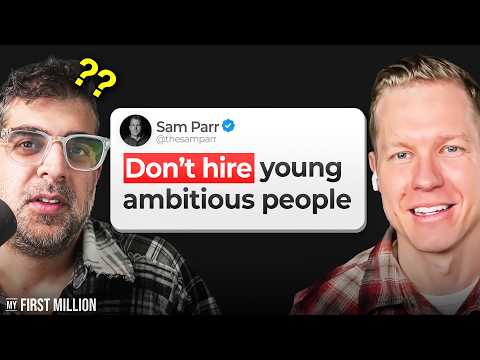
• The biggest mistake a millionaire made was hiring ambitious young people and taking chances on them, finding it significantly better to hire more experienced people and pay them more money for better results. • One millionaire's major mistake was "project selection," picking ventures like a sushi restaurant chain, a social media app, and a craft beer app, which were poor fits and weak market opportunities. • The "Sarah's List" concept involves joining a company with around 1,000 employees to achieve stability, a decent salary, and the potential for stock to 10x, as exemplified by Sarah's experience at Airbnb. • Two potential "Sarah's List" companies suggested are Amazon, due to its potential for AI integration and growth to a $10 trillion valuation, and Neurolink, for its groundbreaking brain-chip technology and Elon Musk's track record. • A key piece of advice for deciding on a next venture is to talk to 20 people in successful roles to find a blueprint to copy and adapt, rather than trying to be completely original. • When seeking advice, the most valuable people are those who care deeply, possess wisdom from extensive experience, and whose principles are so ingrained they become an internal guide. • A missed business idea is a "youth sports combine" that would standardize athletic testing for young athletes nationwide, similar to professional combines, creating a $10 million annual business model.

Watch on YouTube
Our Most Impactful Learnings From 202555:56

Our Most Impactful Learnings From 2025

·55:56

• The speakers discuss impactful learnings from 2025, focusing on leadership, decision-making, and the importance of intentional living. • One key learning is about leadership and influence, drawing parallels to Winston Churchill's speeches and how a single person can shift the morale of millions. They also explore the concept of being an "order" or orator who shapes public opinion. • A significant portion of the discussion centers on improving decision-making skills, with one speaker detailing a "decision register" and a structured "decision survey" involving checking emotional state, identifying a single decisive reason, weighing pros and cons, and considering reversibility and upside/downside. • The "Die with Zero" concept is explored, emphasizing that timing matters for experiences and that money is a life energy that shouldn't be hoarded at the expense of living, advocating for prioritizing life experiences over excessive saving. • The speakers highlight the value of intentionality in life, using the analogy of filling a jar with big rocks (priorities) first before adding sand (daily routines) to ensure what truly matters gets done. • They touch upon the idea of "working smarter, not harder," exemplified by Akon's strategy of creating music specifically for ringtones, which generated significantly more revenue than traditional song sales due to a pricing and contractual loophole. • Another learning involves the concept of reading not just for information extraction, but as a catalyst for sparking thoughts and ideas, likening it to rubbing two sticks together to create a bonfire in the brain, reducing the pressure to memorize everything. • The discussion also touches on the surprising success of products like the Tonies audio player and Yoto Player, which generate hundreds of millions in revenue by catering to a desire for simpler, screen-free entertainment for children, demonstrating a successful "work smarter" approach by identifying unmet needs.

Watch on YouTube
Watch this before 2026, and thank me later26:30

Watch this before 2026, and thank me later

·26:30

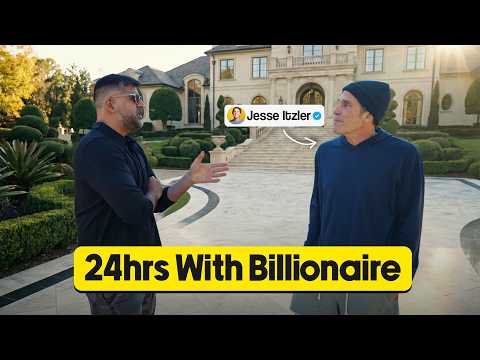
• The core value is learning a system for annual planning, inspired by Jesse Itzler, which focuses on a rich life beyond just financial wealth, encompassing family, health, adventure, and friendships. • The system has three main components: "Getting Light," "Closing Out the Year," and "Defining Your Year." • "Getting Light" involves decluttering physical and digital spaces (apps, subscriptions, home, car, email) to start the year with no baggage and build momentum. • "Closing Out the Year" includes a personal audit by reviewing calendar highlights to recap accomplishments and identify gaps, and writing handwritten thank-you letters as a networking tool and to spread gratitude. • "Defining Your Year" is based on the Japanese ritual of "Misogi," which means identifying and achieving one significant, year-defining accomplishment, ensuring there's a monumental achievement to look back on. • The overarching principle is to plan your life around your priorities rather than letting work and external demands dictate your schedule, using your calendar as an "honest autobiography" and a tool to give permission to say "no."

Watch on YouTube
If You Want Financial Freedom In 2026, Do This1:09:04

If You Want Financial Freedom In 2026, Do This

·1:09:04

• Franchising is presented as an overlooked path to wealth creation in America, with more millionaires reportedly generated from it than from all NFL players combined. • The value of franchising lies in its proven business models and systems, which reduce risk and offer a structured approach to entrepreneurship, making it accessible to individuals who may not have a unique invention or wish to avoid venture capital. • There are approximately 4,000 franchise brands available, ranging in cost from as low as $10,000 to over $4 million, with options suitable for various investment levels and risk appetites. • For those seeking to replace a high income or build significant wealth, acquiring multiple franchise units is recommended, with home services and passive indoor entertainment concepts like "Another Nine" (indoor golf simulators) highlighted as potentially offering high margins due to lower overhead (no labor, no food/beverage). • The franchise industry is ripe with opportunity but also contains pitfalls, particularly with franchise brokers who operate with high commissions (up to 60%) and may only present a limited selection of brands, necessitating thorough research, including reviewing Franchise Disclosure Documents (FDDs) and speaking with existing franchisees. • Franchising offers significantly higher cash-on-cash returns compared to real estate, with franchisees often expecting over 25% IRR, and franchise businesses trade at higher EBITDA multiples (1-2x more) than independent businesses due to their de-risked nature.

Watch on YouTube

About My First Million

My First Million is a podcast by Sam Parr and Shaan Puri where they brainstorm business ideas, break down successful companies, and share unconventional paths to wealth. Known for generating viral million-dollar ideas and interviewing successful entrepreneurs.

Key Topics Covered

Business ideasSide hustlesStartup opportunitiesEntrepreneurshipWealth building

Frequently Asked Questions

How often does My First Million release new episodes?

My First Million typically releases 3-4 episodes per week featuring Sam Parr and Shaan Puri brainstorming business ideas and interviewing entrepreneurs. Crysp sends summaries of each episode so you can quickly identify which ideas match your skills and resources.

Are these official My First Million summaries?

No, these are AI-generated summaries by Crysp to help entrepreneurs extract business ideas and startup opportunities from episodes. Not affiliated with Sam Parr, Shaan Puri, or HubSpot. Watch full episodes for complete context and banter.

Can I get My First Million ideas delivered to my inbox?

Yes! Add My First Million to your Crysp channels to receive daily email digests with summaries of new business ideas, side hustle opportunities, and entrepreneur interviews. Free plan supports up to 3 channels.

What types of business ideas does My First Million cover?

Sam and Shaan discuss side hustles, SaaS ideas, niche services, acquisition opportunities, and unconventional businesses. Summaries extract the core idea, target market, and why it might work so you can quickly evaluate opportunities.

Do summaries include specific business opportunity details?

Yes, summaries highlight the key business model, target audience, and potential revenue for ideas discussed. Each summary captures the main opportunity and reasoning, though full episodes provide deeper market analysis and edge cases.